


The Mausoleum of the Martyrdom of Polish Villages in Michniów is a memorial dedicated to the inhabitants of all Polish villages who were murdered or subjected to repression during the Second World War. The individual elements of the Mausoleum complex form distinct “layers of remembrance”, illustrating the continuity of efforts to commemorate the tragic fate of the Polish people between 1939 and 1945.
The oldest and most important part of the museum complex is the mass grave of the inhabitants of Michniów murdered in 1943, together with a monument erected shortly after the end of the war. Another significant site is the Chapel of St Margaret, built in 1960, where services for the victims of the pacification are still held today. The complex also features the monumental and deeply moving sculpture known as the “Michniów Pietà”, created by Wacław Stawecki and unveiled in 1993.
The newest part of the complex is the modern exhibition building, designed by Nizio Design International and opened to the public in 2021. Its permanent exhibition consists of several modules, including the House of Silence and a series of thematically arranged galleries devoted to the Second World War, extermination, genocide, Michniów, perpetrators, victims and destruction.
The entire Mausoleum complex is surrounded by the Memorial Wall, bearing commemorative plaques, as well as an area filled with crosses and monuments dedicated to individual villages.
The Museum’s Mission
The principal mission of the Mausoleum is to preserve the memory of the murdered and persecuted inhabitants of Polish villages. In addition to managing the museum and its exhibitions, the institution’s staff conduct academic research and carry out educational and public-awareness activities, including museum lessons and temporary exhibitions. They also participate in a wide range of patriotic and artistic initiatives.
The most important dates in the Mausoleum’s calendar are 12 and 13 July, when commemorative ceremonies marking successive anniversaries of the pacification of Michniów are held.
The Sejm of the Republic of Poland established 12 July as a national day of remembrance. Since 2017, it has been observed as the Day of Struggle and Martyrdom of Polish Villages.
The Pacification of Michniów
On 12 and 13 July 1943, German forces murdered at least 204 inhabitants of Michniów and completely burned the village to the ground.
On the first day of the pacification, German forces surrounded the village with tight cordons. They carried a list containing the names of people who, according to their sources, had cooperated with the partisans. Men captured during searches of their homes were forced into four barns, which were then fired upon, attacked with grenades and set alight. Most of the people imprisoned inside were burned alive.
In addition to the men whose names appeared on the list, the Germans murdered the entire Wikło family on 12 July 1943: a father, a mother and their seven children. Ten people were arrested and taken to the detention centre in Kielce for questioning. One of them was released after a ransom was paid. Following interrogation, the remaining detainees were deported to a concentration camp.
Eighteen women were also abducted. Seventeen were deported to the Third Reich as forced labourers, while one was taken to Kielce to work as a domestic servant for a German officer.
A total of 102 people were murdered on 12 July, including 95 men, two women and five children.
The Second Day of the Pacification
In retaliation for the pacification, partisans from the “Ponury” Home Army Grouping stopped and fired upon a German train during the night of 12–13 July.
German forces returned to Michniów on the morning of 13 July. This time, they had no prepared list. On that day, Michniów and its inhabitants were to be wiped off the face of the earth.
Women and children were shot, and everyone who had failed to escape or find a hiding place was murdered. The youngest victim was nine-day-old Stefan Dąbrowa.
At least 102 people were killed that day. The deaths of seven men, 52 women and 43 children have been identified and confirmed. The entire village of Michniów was looted and its buildings were burned down.
On 15 July 1943, the remains of the victims were buried in a mass grave on the former school grounds. The grave remains in the same location to this day.
Michniów as an Important Symbol

Michniów has become one of the most important places of remembrance in Poland. The villages that suffered during the Second World War as a result of the brutal actions of German and Soviet totalitarian regimes and Ukrainian nationalists must never be forgotten. Remembering the past helps us shape the future and ensure that such atrocities never happen again.
In 2017, the Sejm of the Republic of Poland established a new national day of remembrance: 12 July, the Day of Struggle and Martyrdom of Polish Villages. The date commemorates the mass murder of civilians in Michniów, in the Świętokrzyskie region, carried out by the German occupying forces. Michniów has become a symbol of all pacified Polish villages.
A Place of Remembrance

The Mausoleum of the Martyrdom of Polish Villages commemorates all Polish villages pacified during the Second World War. Michniów has become a place of collective remembrance for the Polish people. Today, the memorial complex includes the mass grave of the murdered inhabitants of Michniów, the Michniów Pietà, the Chapel of St Margaret, the Memorial Wall and the modern exhibition building.
Mass Grave of the Murdered Inhabitants
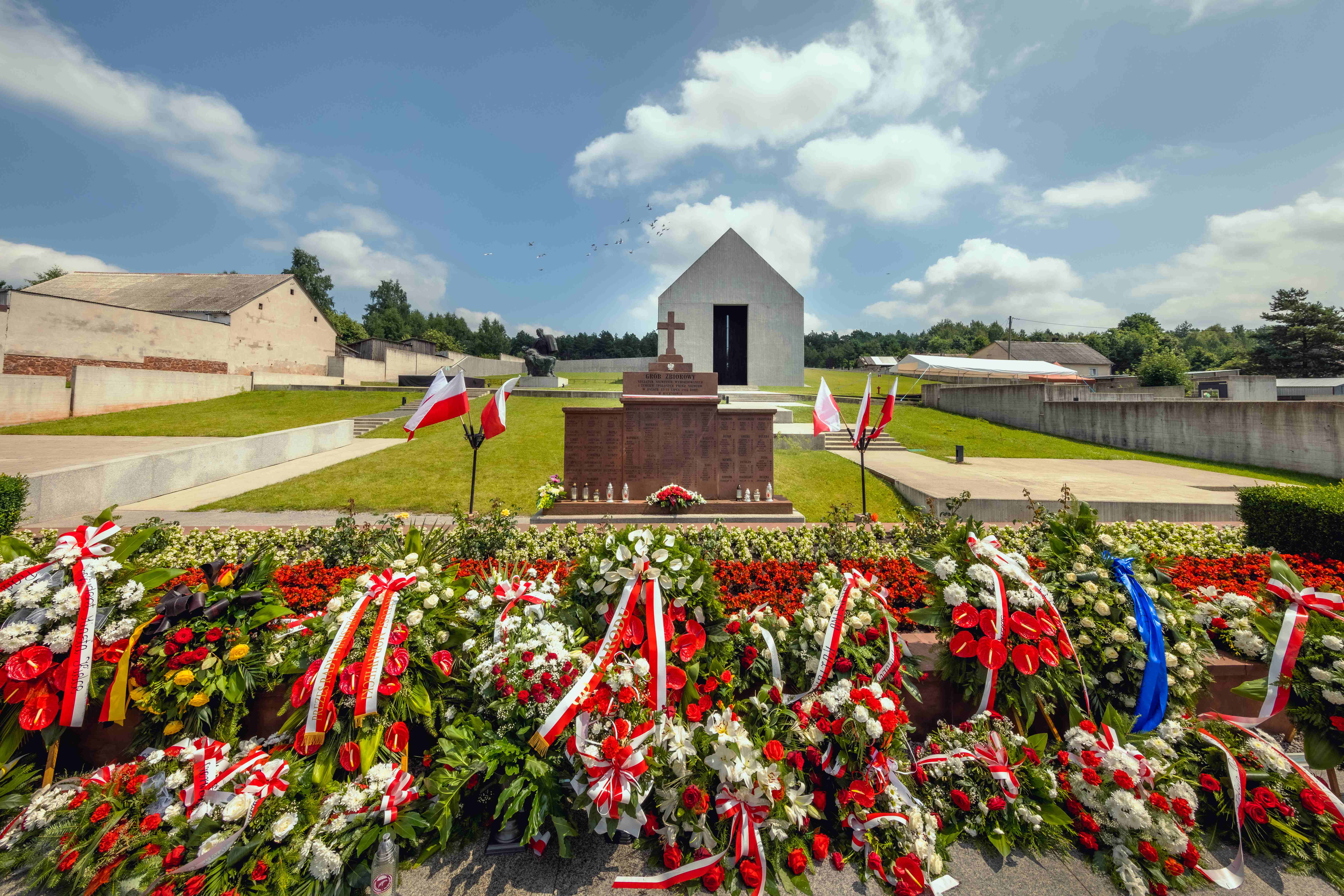
Only a few hours after the tragedy, the surviving inhabitants of Michniów gathered the remains of their loved ones and buried them in a mass grave. In 1945, a monument bearing the names of the victims was erected at the site. Flowers and memorial candles are placed there in their memory.
The Michniów Pietà
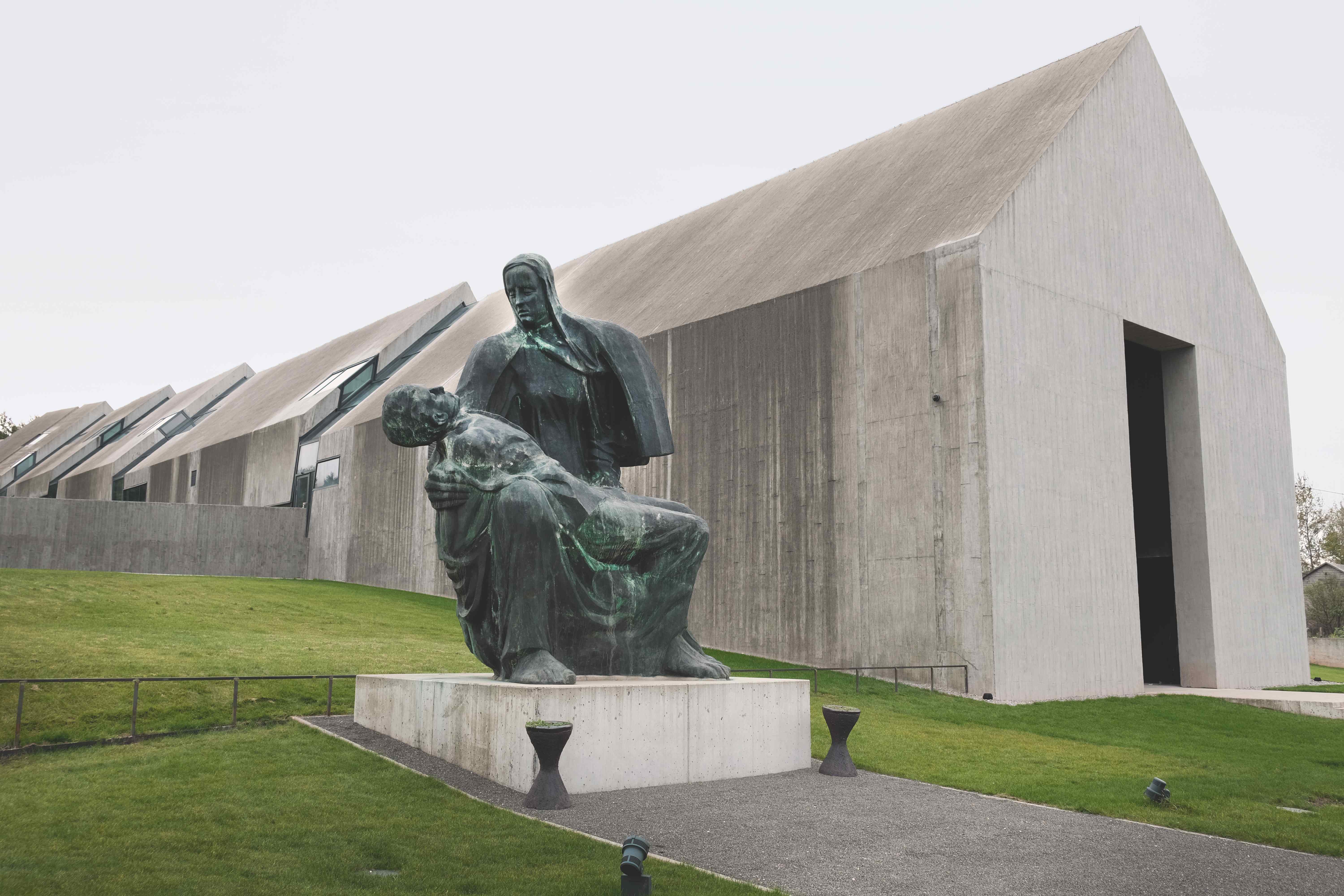
This remarkable sculpture was created by Wacław Stawecki and unveiled in 1993. It depicts a mother dressed in regional costume holding her dying son in her arms. The artist drew upon the traditional image of the Virgin Mary supporting the dying Christ. This profoundly symbolic work conveys the tragic fate of the inhabitants of Michniów.
Chapel of St Margaret
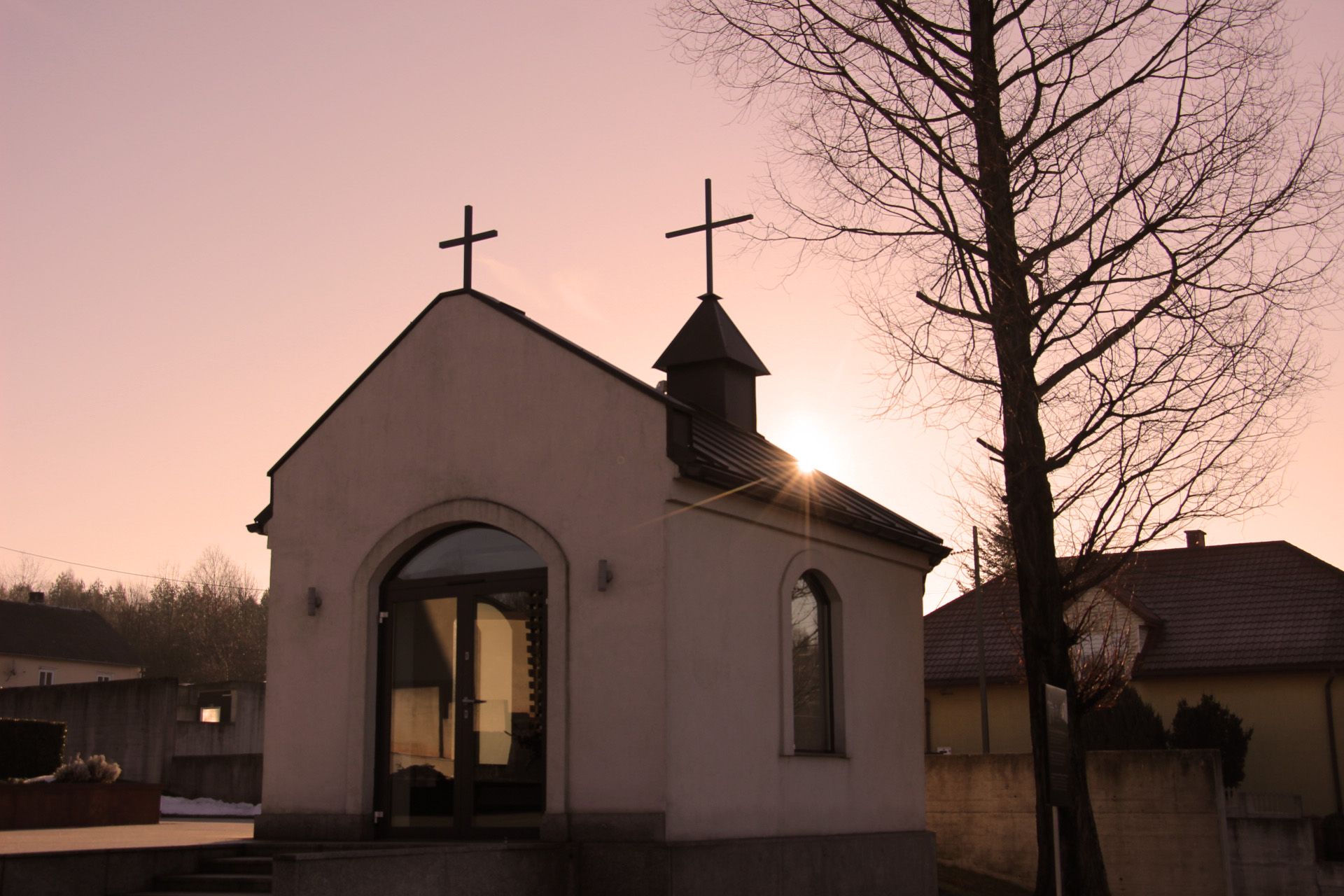
In 1960, a design for an altar by the architect Stanisław Teofil Skibniewski was approved and commissioned. It was made by Władysław Magdziarz from Siekierno. The altar is now located in the Chapel of St Margaret, which forms part of the Mausoleum complex.
It is an important and symbolic place for the inhabitants of Michniów, where they can pray for their murdered loved ones. The feast day of St Margaret is observed on 13 July, the anniversary of the second day of the pacification.
Modern Exhibition Building
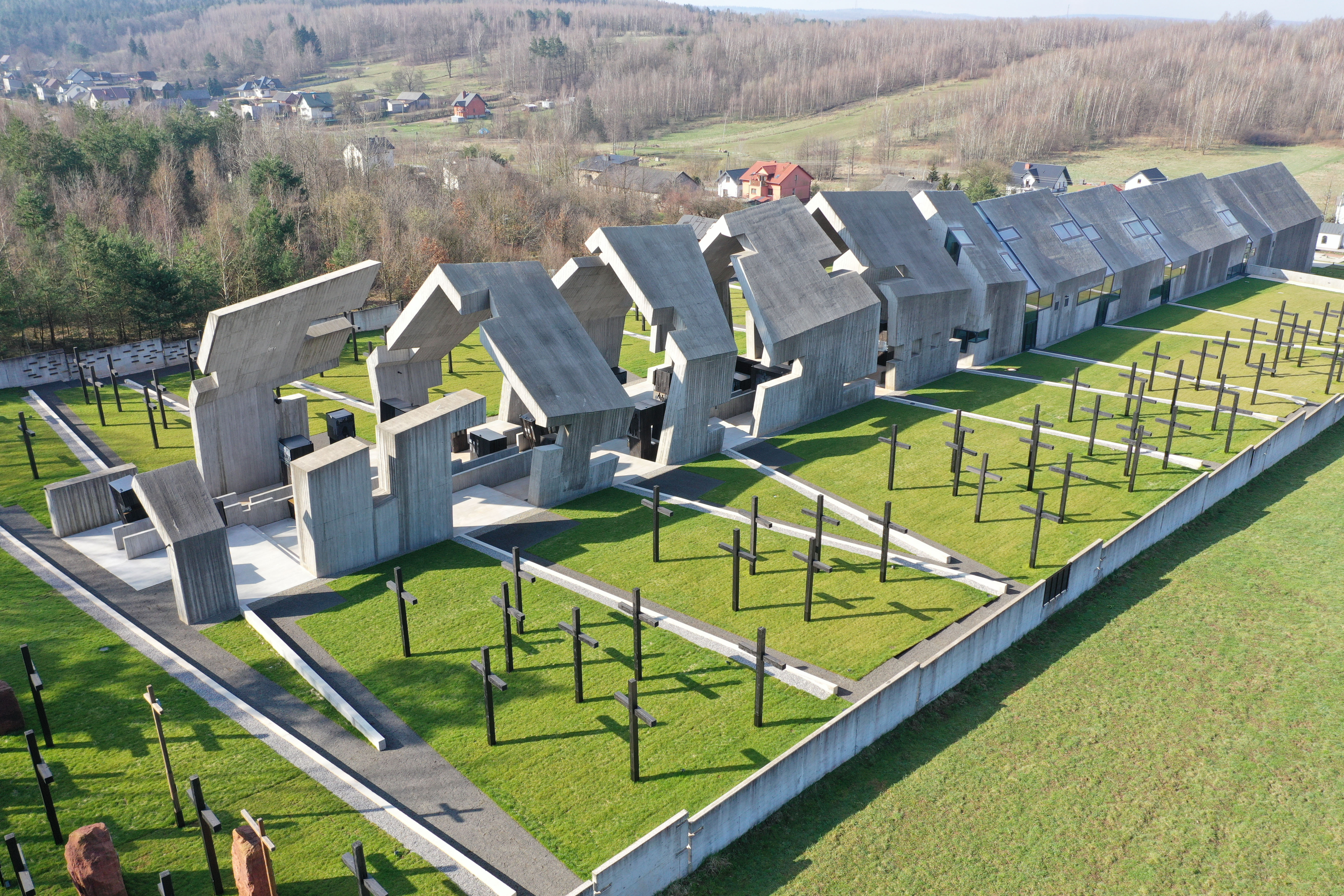
The building was designed by Nizio Design International, a Warsaw-based architectural studio, and opened to the public in 2021. Its form evokes a rural cottage composed of open and enclosed segments.
Wooden boards were used as formwork for the concrete, leaving their imprint on its surface and making the walls symbolically resemble the wooden barns into which villagers were often forced during pacification operations. At night, the illuminated spaces evoke the image of burning villages.
The monumental building contains an exhibition space whose surfaces resemble charred wood. Its distinctive architecture and numerous multimedia installations help convey the tragic experiences of Polish people during the Second World War. This contemplative space reveals the scale of their suffering and encourages visitors to reflect upon it more deeply.